
Monday, November 9, 2009

Traditional Observance, European Concept, Affinity


Going in circles? "If we examine wh
ere Freemasonry is at the moment, to put it bluntly, we are engaged in initiating ever more men into the craft and conferring second and third degrees on them, so that they shall in their turn confer more degrees to a new lot and be Appointed To Offices on to the Masters Chair. To what end? Is it too much to ask 'what advancement'?" -Julian Rees PGM

"What will keep them? More mindless, boring meetings? Only good will and respect keeps many brothers from walking out and it is often not enough to keep them coming back. Lodge meetings are essentially ritualized business meetings but too often there is little business being accomplished. The Master of the Lodge opens and closes in Long Form because without that tedious recital nothing would occur. This is Freemasonry in name only." - James Garland PGM

A struggling lodge is an opportunity and a rare one when there is leadership available. When a Lodge is pared down of excess it is an opportunity to bring in best practices and to look for a new path with new blood while giving committed brothers the chance help set things aright. Far too many lodges just fold up their tent or consolidate with another struggling lodge only for that lodge to do the same in another five or ten years. Many potentially good or worthwhile members are likely to see the handwriting on the wall and get out. The answers for a lodge's problems are most often to be found internally not externally. -George Brat, PGM


Old and New Concepts Give Lodges Direction


European Concept


European Concept lodges infuse themselves with the Continental European system of candidate education, i.e., discussions, essays and reading on the philosophy and history of Masonry. "Short form" language is often used by the Master in non-degree meetings to get to the heart of the Masonic program, i.e., discussions and presentations. There is focus on convivial activities outside of lodge such as meals and mixers as well as events with guests and speakers.

European Concept lodges were pioneered in the 1990s both in the United States and Australia. These lodges differ by means of stricter dress code, and formal festive boards. The term "European Concept" is regrettable, as this format exists all over the world, and it is not terribly unlike the Masonry found in the early days in America.

European Concept (EC) lodges offers its members an opportunity to partake in a thoughtful approach to ritual and emphasis on sociability that can hardly be found anywhere else today. The lodges maintain a dignified and intellectually engaging atmosphere, where the members can study the lessons of Freemasonry and learn to enact them in their daily lives.

Many EC lodges prefer to be selective in their encouragement of visitors (while adhering to the Masonic "open door policy")  to maintain  and enjoy the particular atmosphere of these lodges. EC lodges are often involved in social activities in conjunction with organizations organizations other than the blue lodge.

In New York state, the Independent Royal Arch #2 is a notable example of a EC lodge though its character as such is a result of history rather than adaptation. Humanitas #1123 is another example of an EC lodge.


Traditional Observance


Traditional Observance (TO) lodges generally follow the established ritual of their Grand Lodge, with some ceremonial additions, so far as they may be allowed by their Grand Lodge.  


TO lodges begin with the North American Masonic lodge model and enrich it with traditional initiatic elements practiced in Continental Freemasonry.

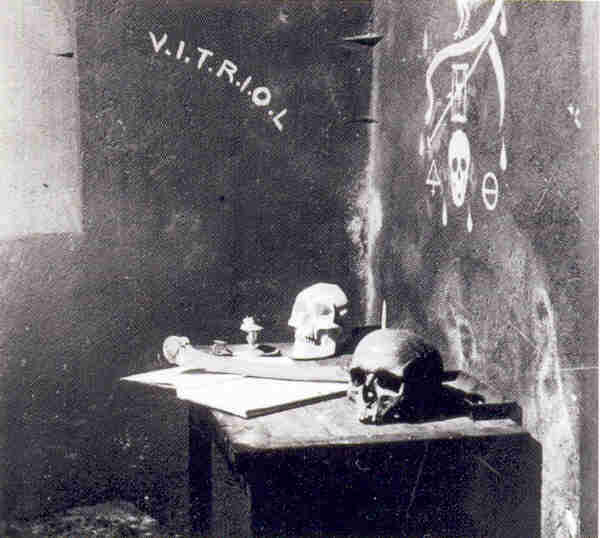
Traditional Observance Masonry is characterized by:  1) a solemn approach to holding stated communications and conferring degrees,  2) the use of the Chamber of Reflection as part of the initiation ceremony, 3) and demanding candidate advancement requirements that reflect an internal consideration of the ritual and Masonic tenets. 


Traditional Observance lodges have an emphasis on the initiatic process.  TO lodges regard the degrees as a transformative process of personal reflection and consideration of how one can engage in self improvement in a community dedicated to that aim.
As "best model" lodges, TO lodges encourage visiting masons though they may be selective in doing so. TO lodges may be less apt to have social functions with external organizations.

St. Johns # 1 is an example in New York, and it has recently officially applied to be such.


Affinity lodges,


Affinity lodges, where men of like interests can gather within the Masonic order, stress brotherhood and familiarity both inside and outside of the lodge. Affinity lodges (AL) may include discussions of topics of interest particular to the Masons involved both in the lodge.

These lodges have been better than most at adapting technology and other means to draw brethren together. Brothers often share information to an extent that may be absent elsewhere, particularly regarding the thematic interest of the lodge and the benefit of the brothers.

It is typical that Affinity lodges will visit other lodges fairly often as a group. This may be owing to the traditions of military or "traveling lodges" that many of these lodges adapted. 


In many of these lodges there is a particular choice in clothing or adornment among the officers and even the general group (such as Scottish kilts.)

It is the habit of Affinity lodges to hold social functions and outings with external organizations whether it be organizations that share a thematic interest, entertainment or for the promotion of the welfare of its members and charitable causes.

One thing Affinity Lodges share with European Concept and Traditional Observances lodges (which may both be described rightly as "affinity lodges") are emphasis on relationships and personal familiarity with the brothers within the lodge. 


Affinity lodges may feature more active festive boards, emphasize communication and relationships outside of the lodge; they may restrict size of membership and emphasize on individual contribution to discourse. Like EC and TO lodges, convivial activities outside of lodge such as meals and mixers as well as events with guests and speakers are encouraged.


Many lodges that are not Affinity lodges formally or historically have the character of Affinity lodges.   These lodges informally gather people who share interests or background. Brothers bring new brothers whom they work with, know from school, church, etc.  The core group provides a natural basis for recruitment and familiarity. By having several groups sharing core interests, these informal affinity lodges do not become claustrophobic and isolated.

Traditionally many Affinity lodges embrace the Grand Master's Classes ("One Day Classes") as the Grand Master's Classes go back in history to old university and military affiliated lodges. Conversely, these same Masons are more active in performing the drama of the degrees later as Master Masons due to the more elaborate staging utilized in the Grand Master Class. 

Affinity Lodge candidates are usually much better informed than the average candidate. Affinity lodge candidates are often already familiar with the brothers, Masonic ritual (it is all public today).  And thus the Affinity lodge candidate has contemplated his decision and is whole heartedly committed. 

Many Affinity lodge members are drawn by the familiarity and community with the brethren rather than the locale.  (Old school, university, workplace or cultural lodges for example often have members far and wide.) Thus the Grand Masters Classes have a particularly useful function for him. Affinity lodges using the Grand Masters Classes have better brother retention than those who give degrees separately or in Grand Masters Classes in non-affinity lodges.

The Affinity lodge is also, notably accompanied by Affinity Masonic Clubs. These clubs often form the basis of  unusually successful Convivial Calendar (with dinners, mixers, cocktail parties, nights out, family nights, business networking, job boards, discussion groups and internet forums. In many circumstances several Affinity lodges of similar nature may be active in a single Masonic club. 

The willingness of these Affinity lodges to extend their involvement with Brothers outside of the lodge room is an obvious cause for their incredible success.

Affinity lodges have boomed and are currently the only area in Freemasonry that may be said to be in such a condition. Affinity lodges have been around continuously, from the days of military and philosophical lodges. Indeed Freemasonry as a Speculative Art was something of an affinity lodge among the working craft masons. Some of the oldest and most prestigious lodges are affinity lodges, such as Ars Quatuor Coronatorum and the Harvard Lodge.  


In America there is a strong history for example of cultural lodges, community and professional lodges. Half the lodges in the London metropolitan area are now affinity lodges. There are an abundance of Affinity lodges in New York- Kane, Daylight, Publicity, Holland, Scotia, to name just a few.

Are there drawbacks with the Traditional Observance, European Concept and Affinity approach? Perhaps. They tend to be a drop of water on a thirsty plain, and thus quickly become much more exclusive and expensive for new members. Without growth of these approaches, there may be a justifiable fear that the popularity of TO, EC and Affinity lodges can polarize lodges between these successful lodges and those that struggle.

Lodges that that do not encourage healthy fraternal relationships outside the Lodge become less charitable and the Masons less engaged.

---------------------------

WHEN THE WAYS OF OUR LODGES DO NOT WORK IT IS TIME FOR A CHANGE. LET US BRING GOOD IDEAS TO OUR LODGES AND APPLY THEM SO THAT WE MAY SAVE AND REJUVENATE RATHER THAN CLOSE THEM.


Wednesday, October 14, 2009

Where I Was First Made a Mason


Where I Was First Made a Mason:
A Lodge-based Approach
By D.J., J.S.&P.M.

What We Can Accomplish

This is not a critical review of problems. This is about solutions. This is not about dwelling on the status quo. This is thinking about what we can become. This is not about abolishing our time honored traditions but creating a vision for the future of our lodge.

We know what we came here to do - improve ourselves amongst a family of Brothers. We know we can do more to improve ourselves as Masons and men- together, both within and without the Lodge.

We know that as good men, we are supposed to assist each other to become better in all aspects of our lives and support each other in our pursuits.

Brotherhood, a Family

The lodge itself is supposed to operate as a family. In our effort to be more efficient we may try to run Masonry and our Lodge in a business-like manner, which can be good. But we cannot forget that Masonry is a family that conducts its business for the benefit of its members.

The heart of Masonry is not in the fancy lodge rooms; (for the first 100 years Masons met in bars and taverns.) The heart of masonry is in each individual Brother of our lodge. As such, it is not enough simply to meet but we must meet in a meaningful and productive way. We must attend to needs of members and develop a brotherhood among those who really want to act as family.  

Without doing this it is difficult for the members to become close to each other, to prosper in their individual pursuits or to maintain a productive lodge. Knowing each other means more than simply knowing each other’s name. We must become familiar in the way that is consistent with being a family. We must know who we are, where we are from, what businesses we are in, what are our goals, our needs, our aspirations, our perspectives; what each of us are all about.

We must take the steps to build Masonic bonds that have employed historically and adopt some of the approaches. We will likely find that there are ideas outside of what has been done in the past that will yield results towards our time honored goal of making each other better, more successful men.

Starting with the Basic Tenets and Lessons

We are all aware of the basic tenets and symbols of Masonry. Let them guide us in our search for direction in what we want to accomplish. This is practical symbolism and must be widely interpreted as lessons to instruct us on how to fulfill our duties in our basic Masonic community - our lodge. These lessons must not be relegated mere ceremony. We must incorporate them in our every day lives.

Take for comparison the parishioner who attends services in extravagant dress, always seated prominently in the front row; conspicuously reciting each verse and hymn with meticulous precision. If his service to God begins and ends within the walls of the church; if he carries out his life in extravagance and waste; what has he gained from all of his show? What has he lost?

I know we agree that Masonry is not simply about putting on a ritual show but about acting on the lessons.

Applying the Symbols in Our Daily Lives:

  • The Square and Compass instructs brothers in their dealings with each other to deal squarely and on the level- and urges that we deal with each other in everyday life.
  • The Plumb teaches us to be upright and unbowed and to be sure that our brother is upright and unbowed. We should be actively involved in assisting our brothers in living a respectable life, neither in disregard or distress. We should help each other stand up to the difficulties of life and to get ahead.
  • The Cable Tow says that we are tied together through our Lodge family. It is the symbol of our obligation to always be there for each other, a tie that extends outside of a lodge. The length of a cable tow is said to be to the limit of our abilities.
  • Trowel & Mortar represents the Mason that spreads the mortar of Brotherly love which holds our Lodge together. Brotherly love is not just a flowery phrase. It is the steadfast love and concern one has for a brother that overcomes frustration and disappointment or any negative feelings one may have in passing.
  • The Beehive symbolizes the bees' proper social order we should mimic- bringing together productive, industrious individuals in a cooperative manner. We are taught to be prosperous and cooperative as individuals for our collective well being.
  • Skull and Crossbones, Tomb and the Sprig of Acacia: We are symbolically reborn to a family based on these principles. It also reminds us that we are part of a continuum- and that we should always want more and better for those who come after us and better men than us to occupy our lodge in the future.
  • The Token and Five Points of Fellowship reminds us we should always remember to give a hand and offer a prayer, offer words of advice, encouragement and recommendation, hold a secret in our breast, and to walk any distance necessary to help a brother. It also reminds us of charity in our hearts. Charity is a virtue in our dealings with each other,- and not a business expense or perfunctory act like paying taxes.
  • Rough Ashlar and the Perfect Ashlar refer to working cooperatively to make each one of us better. The Ashlars are also admonitions to the Lodge: we have to refine our membership, through education and selection. Selection is where it all starts. Let us accept people who are interested in our brotherhood and worthy of the same. Let us accept those who will grow with Masonry. We can’t let superfluous words be all we have to offer each other and our prospective members. We must to be able to offer a Lodge with well chosen men willing to do the hard work to make each other better.

Putting Our Challenges in Context

In New York lodges there are only a fraction of the names on the membership rolls than there once were and most no longer associate with the Craft.  

Membership was at its height in the 1920's through the 1950's. It declined through the 1960’s and 70’s with the cultural upheavals of that era, and again with the “me generation” of the 1980’s. Most of today’s lodges are empty and graying even as the U.S. population has doubled from the time that Freemasonry was first at its zenith. Masonry itself has changed.
 
In former times Lodges were community-based. Lodges were strong enough to be beneficial to their membership and their communities. There were Masonic Supper Clubs, Square and Compass Clubs, and importantly, the Masonic Employment Bureau. Large groups of friends would join together, cementing their bonds in Masonic rituals and structure.

Masonic learning was stressed and it was an honor to be a Mason, especially at a Lodge where men took their Masonic commitment seriously. Masons were the leaders of their communities, the doers and the thinkers, the people involved and the people that communities relied upon. Some lodges had brothers from all backgrounds who did every job under the sun while others were based around school ties, neighborhoods, ethnic communities and work. What mattered was that they were men who were resourceful and committed.  

Becoming a Mason (especially in the best functioning lodges) could be one of the more difficult things to attain in life. Much of this has declined for various reasons. It is time to revitalize these efforts where they benefit our lodges.

Applying the Tools

Now we have more tools and technology. Nevertheless we are doing less to build our bonds with the group. Worse, we have thrown the doors open to men who interested in the trappings but not our community and our work. When new members arrive, it is doubtful that things will be explained and opportunities provided to become involved. Further, we have closed the doors to many qualified, capable, informed men because of petty politics, and had others leave because they felt they were not getting what was advertised (a chance to join a family, improve themselves and to assist in the betterment of each member of their new family.)

Many lodges have suffered as a result. This is a self reinforcing cycle. Left unchecked, the behaviors described above make Masonry increasingly less desirable to prospective members and it is increasingly difficult to maintain the current membership or for the lodge to fulfill its obligations to its members.

Practical Masonic Solutions

In order for our lodge to survive, we must refocus our attention towards putting our Masonic tools to work and refining our membership. This begins with getting our members involved in projects to improve the lodge. It may turn out that some members may not return to the Lodge. Others may find that all of the hard work does not suit them.

As we bring in a new generation, our new members will be more energetic, more ambitious and more willing to learn from experienced Masons. We should increase our efforts to bring in students and young professionals, solid men who have something to offer others and are willing to offer it. We want candidates who have relationships with someone in our lodge. We should feel confident a candidate will grow with Masonry and make the lodge better. In short we want worthy, well qualified Masons.

As we begin to cultivate membership, new members will be naturally attracted by what we have to offer; not by superfluous words but by a demonstrated willingness to do the hard work to make each other better. 

Specifically, the following must be implemented in some form to ensure the future of our lodge: 
  • We have to offer real Brotherhood in the Lodge and real opportunities to become better and to aid each other in times of need.
  • Re-institute regular socializing, i.e. meet-ups for dinner and drinks.
  • Utilize technology- Masonic web forums, electronic job boards and a resume bank, and listings of businesses and services, bios, email and contact information, quarterly or annual updates on what is happening with our members. That way we do not limit things just to those who can make the social dinners or drinks, and we can even stay in touch with people have geographically left the lodge and might otherwise consider demitting.
  • Fund-raisers that can help offset the need for rising dues while prompting people to become involved.
  • Informal trips to fish, play golf or whatever people are interested in so that we can get to know each other better on a personal basis, as befitting friends and brothers.
  • Meet new prospects in “Brother Bring a friend” nights and reach out to recommended and qualified new men.
  • Hold stringent “Proficiencies” between degrees to ensure a commitment to the learning of Masonic values.
  • Offer Brothers the option of remitting their Lodge dues in-lodge electronically to decrease non-payment among active Brethren.
These are just a few of the steps that we could take. I know many of us are willing to work to implement these changes and we look forward to your leadership. To be a brotherhood we must make an effort to know each other and we absolutely must have a vision for the future of our lodges.
________________________________________
54,000 in New York, down from a high of around 345,000 in 1930. There were around 310,000 in 1960 before beginning a long slide. The average age of a Freemason in 2004 was 64.02. Well over half of Masons in America are no longer active in lodge Freemasonry.

Tuesday, October 13, 2009

Masonry Builds Capital for its Members

MASONRY BUILDS CAPITAL FOR ITS MEMBERS

A great many Masons have been leaders and contributors to their community in ways large and small. While it is true that there are far more Masons whose names would rouse no recognition except among their close family and friends, the list of famous Masons reads as a list of the most influential and productive (as well as famous and successful) people of the past three centuries.


The misunderstanding is that Masons have operated as some sinister, plotting society. The list of well known Masons that accomplished good is far longer than that of infamous Masons. This point does not requires proof here nor is relevant to this article. The point is why have Masons been this successful. There are many answers, but one may be rooted in sociological understanding of "soft capital".


Masons have been successful in develop the habits and perspectives that expose them to opportunity. It is a dynamic which Masons themselves seldom appreciate.


Masons by their participation in the Craft, increase their external social networks. In the practice of the Craft they learn to deal with each other in a cooperative and acceptable way that increases amity among each other. They also value and earn symbolic prestige (or symbolic capital) that is a gateway to real resources. All of these things are necessary for success and they are often termed by sociologist as "soft capital".


Sociologist often explain the concept of soft capital accumulation as such:


1. First, accept the kinship of their inner circle. Just as in families that requires privacy, trust, commonality and mutual high-prioritization placed upon the well being of a group over the long term. That comes from both introduction based upon commonality and a process of culturalization and purchase. It also comes from understanding and embracing a way of life. Optimally this way of life should encompass the ideology of mutual benefit, and of a particular social order.


2. Secondly they increase their cultural capital. Cultural capital (like all capital) is exclusionary by definition. It means discovering information, habits and approaches that are most effective and acceptable by their peers. The lack of cultural capital is a barrier, and this barrier prevents people from rising in the class and economic structure and thus gaining greater opportunity.


3. Then there are the relationships of social networks, known as social capital. That is the process of building relationships. There is limited trust and a high level of competition wherever social capital is most profitable. (Externalizing class lines allows each Mason to build social capital in a way that a competitive economic and social structure seldom permits.)


4. Sociologist have more recently expanded the notion of soft capital to include symbolic capital. When someone rises in any structure to offer leadership and service it connotes merit. And that is why of course, altruistic and/or ambitious people try to get into the best [insert institution or group] and then become officers and leaders. It opens the doors inclusion for some while excluding others who have a different set of connections and experiences. (Masonry instead encourages both the honorable status of all its members and has a number of positions to be fulfilled to maintain the function of the organization.)


Being productive by having more people work on together benefits everyone. And Masons develop the confidence and mindset of institution joining and building as a matter of course. And institution building is a matter of soft capital more than hard capital (i.e. currency.) And soft capital is often a prerequisite for acquiring tangible forms of capital as well.

Tuesday, March 24, 2009

Excerpts from a noted PGM's on Improving the Craft ( Intro and 4 Parts)


Introduction: Excerpts from Dwight Smith, PGM 
"Wither Are We Traveling"

We are looking at the symptoms – not the disease. The real source of the trouble is within ourselves.

Such problems as we may have will not be solved by forcing men to memorize a set of questions and answers, nor by cramming books and lectures down their throats… nor by devoting our energies and resources to other organizations or movements, however worthy they may be.


The cure isn’t that simple, either. The patient’s indisposition will not be relieved by nostrums. The treatment, too, must come from within.


Part I Self Examination
Part II Light from the East
Part III  Squaring Our Work
Part  IV Charity at Home


PART I: SELF EXAMINATION


Answer honestly! Can we expect Freemasonry to retain its past glory and prestige unless the level of leadership and quality of membership is raised above its present position?  Let us look to see that we have the material necessary to build and maintain a good lodge.


        1. Good leadership, full stop. On many an occasion in the past 14 years, Masters and Secretaries have come into my office to ask my advice on what to do about lagging interest. Again and again I have said, “There is nothing wrong with your Lodge, nor with Freemasonry, that good leadership will not cure.” I believe that.

        2. How well are we guarding the West Gate? We are permitting too many to pass who can offer the fee and little else. On every hand I hear the same whispered complaint, “We used to be getting petitions for the degrees from the good, substantial leaders in the community. Now we are getting. . . .” Just what it is they are getting, you know as well as I.  

        3.  Has Freemasonry become too easy to obtain? The Lodge demands little and gets little. It expects loyalty, but does almost nothing to put a claim on a man’s loyalty. When we ourselves place a cheap value on Masonic membership,how can we expect petitioners and new members to prize it?


PART II: LIGHT FROM THE EAST


A teacher in the public schools of a neighboring State cherished a long-standing desire to become a Master Mason. His petition to the Lodge in which he resided was accepted. He presented himself for the Entered Apprentice degree, but never returned. The Brethren of the Lodge concluded, I am sure, that they had made a mistake in electing that Entered Apprentice because of his apparent lack of interest.


But it was not lack of interest that caused him to go out of the door, never to return. It was disappointment and disillusionment. The performance of the Master of that Lodge was such that it constituted an insult to the candidate’s intelligence. Because the head of the Masonic Fraternity in that community was careless and crude, because he was attempting to do something for which he was not prepared, because he was trying to give “good and wholesome instruction” on subjects he knew nothing about, a good man was lost to Freemasonry.


On first hearing, that story made a profound impression upon me. The more I have thought about it, the more I am convinced that the Number One responsibility for any tapering off of membership, any lack of interest and attendance, rests squarely upon the shoulders of our Lodge leadership.


Yes, I know the subject is a touchy one. But in introducing it, I am only putting into print what has been whispered in the corridors these last ten years.


Take a long and thoughtful look at the names of the men who served our Lodge as Master 100 years ago – or even 50 years ago. Consider the positions of importance those men occupied in their respective communities. Then let us ask ourselves whether our present day leadership is in the same league.


One unforgettable Lodge meeting stands out in my mind. ALodge was having trouble maintaining interest; membership was dropping; it had called for help. When the hour came for the meeting to begin, there had been no preparation. I sat around waiting for Lodge to be opened; sat around while the candidates were being prepared; sat around while a Warden tried to enlist a craft, actually calling for volunteers, wheedling, cajoling; sat around while the Master, asked those on the sidelines to say a few words. There was no business to cover and no agenda which means the meeting has no reason.  So in short, I sat around. What was there in that meeting that would make anyone want to come again?


Looking back on some of the meetings the year I was Master, it is a wonder to me the Lodge held together. Many of my meetings were such a first class bore that I would do almost anything to avoid getting trapped in such gatherings today. We want our Lodges to regain the position they once occupied in the interest and loyalties of men, we had better gain a proper perspective; we had better sort things out in the order of their importance. To open the discussion, permit me to make four pertinent observations:


1. We must pay more attention to proficiency in the East. We make a great to-do over proficiency of candidates. We want to devise some method whereby new Master Masons may be forced to memorize a set of questions and answers rather than demonstrate an understanding of the degree. But we do little or nothing to insure proficiency where it really counts. A Master is expected to be Master of his Lodge. Theoretically, he “sets the Craft to work and gives them good and wholesome instruction.” Yet what do we require for election as Master?  (Continued after Picture)


2. There is far more to being Master of a Lodge than the mere recitation of a ritual. We are paying the penalty of years of “mass production” practices, and a bitter penalty it is. When Masters of Lodges are so lacking in imagination and vision that they cannot conceive of a Masonic meeting unless a degree is conferred, then we need not expect a revival of interest and attendance and we need not look for an upswing of membership short of war. I would a thousand times rather see as Master of a Lodge a man who can provide real leadership, a man who can give “good and wholesome instruction,” a man who comprehends what Freemasonry is all about, even if he cannot confer a single degree. Suppose he can not recite the ritual. So what? There always are those who are eager and willing to do ritualistic work, but there are precious few who can provide inspired leadership.  


3. It is high time we start looking about for the best possible leadership and enlisting the support of men who can lead. But instead, we consider only those who come to Lodge, those who stick it out in the endurance contest. We “start in line” the man who is on hand whenever the door is opened regardless of whether he has even the most elementary qualities of leadership. If the practice of automatic ladder promotion of officers must be discarded in order to obtain the kind of leadership we should have, then by all means let us discard the foolish custom. There is nothing in the winning of an endurance contest, in itself, that qualifies a man to be Master of his Lodge.


4. If the so-called “line” of officers must be shortened to enable men of ability to serve their Lodges without years in minor offices, then what are we waiting for? Why not shorten the line? Is not good leadership for one year more important than keeping a seat warm for five?


5. If Freemasonry is to command respect in the community, then the man who wears the Master’s hat must be one who can command respect. The young teacher who did not return for advancement because his entire conception of Freemasonry was colored by what he saw and heard in the East. The Master of a Lodge is the symbol of Freemasonry in his community. If he is not a man upon whom intelligent people may look with admiration, then we need not expect to reap a harvest of petitions from intelligent men. Make no mistake. Men judge Freemasonry by what they see wearing Masonic emblems.


PART III: SQUARING OUR WORK, PLANS FOR IMPROVEMENT


Look it in the face: too few Lodges, with those Lodges we do have much too large. Instead of devoting our thoughts and energies to ways whereby a new Master Mason may find a sphere of activity within his Lodge, we let him get lost in the shuffle. Then we nag and harangue at him because he does not come to meetings to wander around with nothing to do. We are hard at work to make each Lodge so large that it becomes an impersonal aggregation of strangers – a closed corporation. 


1. Has the American passion for bigness and efficiency dulled the spirit of Masonic charity? The “Box of Fraternal Assistance” which once occupied the central position in every Lodge room has been replaced by an annual per capita tax. That benevolence which for ages was one of the sweetest by-products of the teaching of our gentle Craft has, I fear, ceased to be a gift from the heart and has become the writing of a check. And unless the personal element is there, clarity becomes as sounding brass and tinkling cymbal.


2. Do we pay enough attention to the Festive Board? Should any reader have to ask what the Festive Board is, that in itself will serve to show how far we have strayed from the traditional path of Freemasonry. Certainly the Festive Board is not the wolfing of ham sandwiches, pie and coffee at the conclusion of a degree. It is the Hour of Refreshment in all its beauty and dignity; an occasion for inspiration and fellowship; a time when the noble old traditions of the Craft are preserved.


3. What has become of that “course of moral instruction, veiled in allegory and illustrated by symbols,” that Freemasonry is supposed to be? If it is a course of instruction, then there should be teachers, and if ours is a progressive science, then the teaching of a Master Mason should not end when he is raised. I am not talking about dry, professorial lectures or sermons – heavens no! That is the kind of thing that makes Masonic education an anathema. I am speaking of the conversation among Masons who have taken time to review Masonic literature and look into themselves to see how they might humbly improve themselves.


4. Hasn’t the so-called Century of the Common Man contributed to making our Fraternity a little too common? We can not expect to retain the prestige the Craft has enjoyed in the past if we continue without challenge to permit this.  


Part IV CHARITY AT HOME: The Most Masonic Virtue

Ask the average Mason what has happened to Masonic charity and he will rattle off an impressive list of organized, institutional projects of a benevolent nature. He will tell you that there is a Masonic Home, hospitals for crippled children, research programs for mental illnesses, prevention of blindness, muscular dystrophy. If he is well informed he will tell you about a visitation program in Veterans’ Hospitals.  


Pin him down and ask him what his Lodge does in the way of benevolence in the Craft. He may tell you that a portion of each member’s dues goes to help operate the Masonic Home; that sometimes a goodly sum is collected in voluntary contributions for the Home; . . . and besides, the dues of several hard-pressed Brother were remitted several years ago. 


Then nail him to the mast and ask him, “How long has it been since you went on foot and out of your way to deliver aid and succor a Brother and his family, or worked to improving his situation?  When is the last time that you personally acted to improve the community around and the life of the people in it through direct action with no fanfare?” 


1. Brethren wanting to gain approval among the purple line working overtime to make Freemasonry another big charity? It was an unhappy day when some eager beaver conceived the idea that our Craft should adopt the methods of the service club, (adopting some part of the human anatomy subject to misfortune and calling for funds to be placed to some outside agency to benefit it.) What of the personal charity and assistance of Mason to Mason within our lodges?


2. What has happened to Masonic Charity? Time was when it was one of the most commendable teachings of our gentle Craft. It was not accompanied by any fanfare but the community knew about these acts of Masons all the same, and the prestige of Freemasonry reflected that knowledge. Why, then, do we neglect that phase of our Masonic life that can have the most gratifying results? What has happened? We don’t want to be bothered by anything that will require more time and effort than the writing of a check.


 LOOK AT THINGS A DIFFERENT WAY.